
Wim de Groot knew from an early age that art would play a defining role in his life. In the autumn of 1965, when he was only fifteen years old, he recorded a conviction in his diary that would shape the decades to come. On October 8, he wrote, “My future life is being determined here.” Three days later, he added an even clearer declaration: “Oh, I want to become a painter.” What began as an adolescent certainty developed into a lifelong journey through painting, drawing, restoration, artistic exploration, disappointment, perseverance, and an enduring belief in creative independence.
For de Groot, becoming an artist was never simply about producing images. Painting and drawing represented freedom and independence, ideals that resonated strongly with the social and cultural transformations of the 1960s and 1970s. Although he initially imagined the life of an artist in romantic terms, his path would prove considerably more complicated. Yet the difficulties he encountered became part of the experience through which he developed his own artistic identity.
Discovering Art Beyond the Studio
As a young man, de Groot approached art with intense curiosity. He visited the Stedelijk Museum and contemporary galleries in Amsterdam, searched second-hand bookstores for publications about artists and artistic movements, attended classical concerts at the Concertgebouw, and experienced performances at the Stadsschouwburg and Carré Theatre. Literature, music, visual art, and popular culture all contributed to his developing understanding of creativity.
At the same time, he worked continuously on his own artistic abilities. Drawing became an almost unavoidable part of everyday life. School diaries, homework sheets, and even the wallpaper of his childhood bedroom became surfaces on which he could experiment. His creativity was not restricted to a designated studio or formal artistic exercise. Wherever there was an opportunity to draw or write, he used it.
His influences were equally varied. He found inspiration in the Cubist language of Pablo Picasso as well as the colorful visual culture associated with Dutch designer Marijke Koger and the flower power movement. These different influences encouraged him to explore possibilities rather than remain within a single artistic formula.
As a teenager, de Groot believed strongly that his paintings and drawings would eventually find an audience. He hoped that his work could provide not only personal fulfillment but also a livelihood. His ambition was particularly focused on gaining admission to the Rijksakademie van Beeldende Kunsten in Amsterdam, where he imagined developing his artistic practice alongside fellow students.
A Difficult Encounter with Formal Art Education
De Groot was accepted into the Rijksakademie, but the experience was very different from what he had imagined. Instead of finding an environment that encouraged his creative ambitions, he felt increasingly alienated by the institution.
The repetitive exercises of drawing from classical plaster models and what he experienced as a gloomy atmosphere among fellow students gradually diminished his enthusiasm. The young artist who had entered the academy with energy and confidence found himself struggling with discouragement.
This experience became an important realization. De Groot came to understand that conventional institutional art education did not necessarily provide the environment in which his creativity could flourish. Leaving the Rijksakademie therefore became not the end of his artistic ambitions, but a turning point in how he would pursue them.
Restoration as a Second Path into Art History
After leaving the academy, de Groot spent a period unemployed. Then, almost by chance, he encountered an article in the Amsterdam newspaper Het Parool about the work of a painting restorer at the Stedelijk Museum. The discovery immediately appealed to him.
Restoration offered something that formal artistic education had not: the opportunity to study artworks from close range and understand how artists of earlier generations actually created them. He was particularly attracted to the possibility of looking “into the kitchen” of the old masters, examining their techniques and discovering how their visual effects had been achieved.
He eventually developed a dual professional path, combining his life as a freelance artist with a career in restoration, specializing in works on paper. Restoration provided financial stability while simultaneously deepening his knowledge of art materials, techniques, artists, and artistic traditions.
Working with historical artworks also gave de Groot an appreciation for the vulnerability of art. He encountered works that had suffered the effects of time, handling, and changing circumstances. Each commission required patience and care. Through this work, his respect for artists and their creations continued to grow.
His restoration practice also brought him into contact with collectors, professionals, and families who valued artworks as part of their personal or cultural heritage. These encounters expanded his understanding of the different ways people relate to art and contributed to his development both professionally and personally.
Painting Through Persistence
With his restoration studio flourishing, de Groot was able to devote more time to his own paintings and drawings. The arrangement was not always easy, and his artistic journey remained a struggle, but he continued to work.
Looking back, he describes this persistence through a simple conviction: “It was meant to be!” His commitment to painting survived periods when recognition was difficult to find. Rather than abandoning his artistic practice, he continued developing his oeuvre independently.
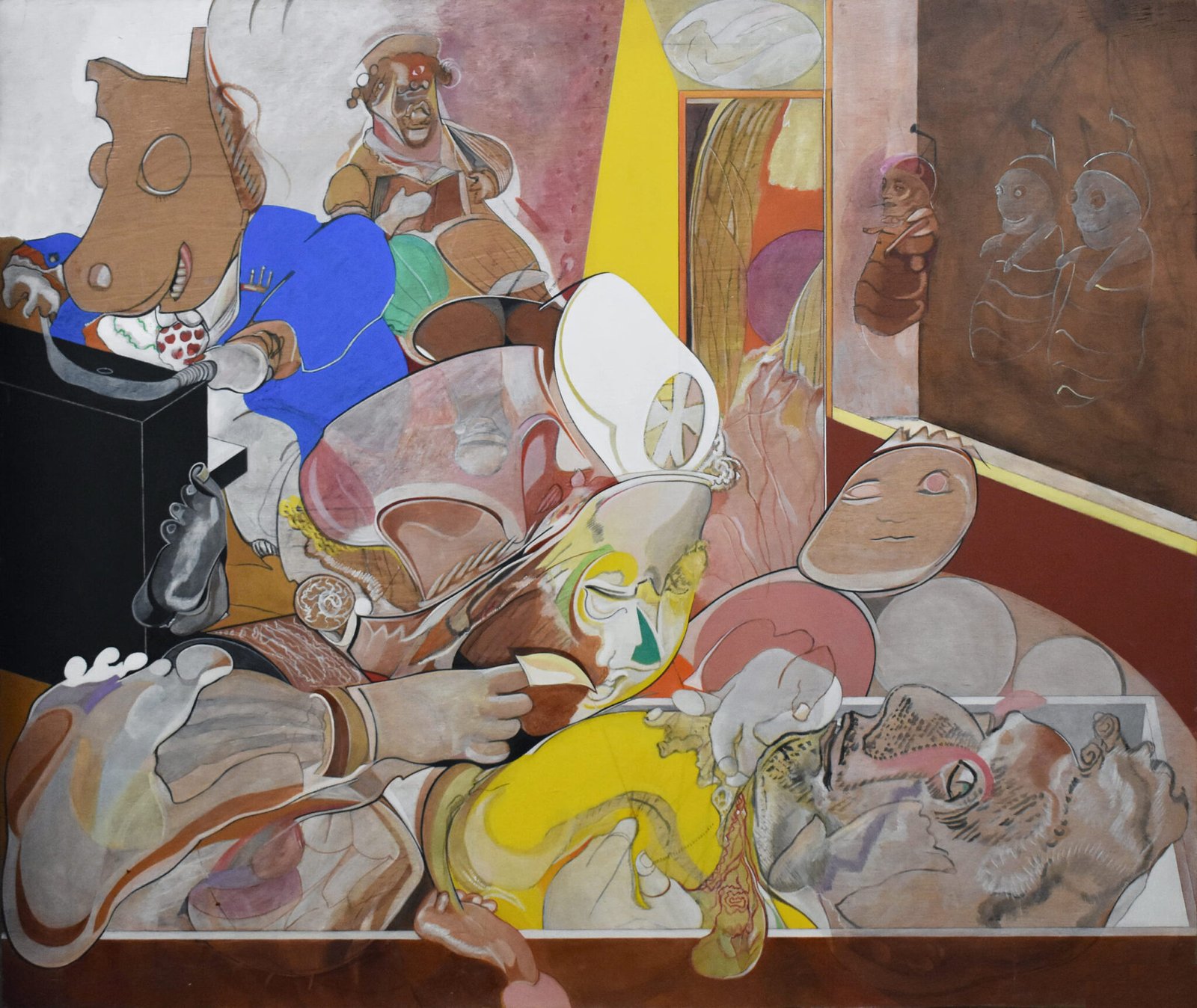
One example is We’re A Happy Family, painted in 2004 in oil on a wooden panel. Measuring 110 × 130 cm, the work belongs to the body of paintings through which de Groot has pursued his own visual language over the years. Like his broader practice, it can be viewed within the context of an artist who continued creating despite uncertainty about how his work would be received.
The Challenge of Finding an Audience
Recognition proved to be one of the most difficult aspects of de Groot’s career. He recalls encountering disinterest and a lack of understanding regarding what he wanted to communicate through his work.
At one point, he decided to take matters into his own hands. He contacted approximately forty galleries in Amsterdam, presenting his work and asking them to consider representing him. Around a quarter responded positively, and he ultimately selected a gallery on the Prinsengracht.
The experience, however, did not produce the kind of exposure he had hoped for. According to de Groot, the gallery owner did not invite her network to the opening, and the gallery was frequently closed during official visiting hours. These circumstances contributed to his continuing sense that his work was being presented without the opportunity to reach a meaningful audience.
For de Groot, the difficulty has never simply been about selling paintings. It has been about whether viewers can enter into the visual world he has spent decades constructing. He has often felt as though his work was communicating in a language that many people did not immediately understand.
Mariska: A Creative Partnership Built on Trust
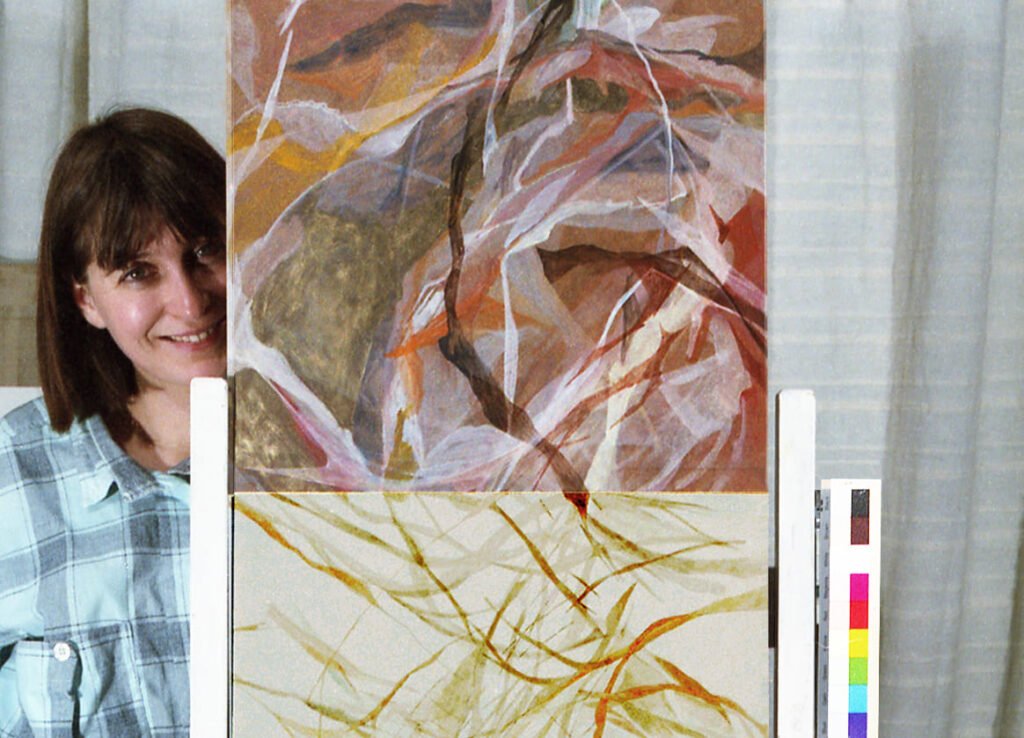
Amid these professional challenges, one relationship has remained central to de Groot’s artistic life: his bond with his life partner, Mariska.
Their connection was strengthened by a shared passion for art. Mariska regularly visited his studio, where the two discussed his latest developments and considered how new works might be interpreted. Her responses could communicate an immediate reaction even before words were spoken.
For de Groot, this relationship became an important part of his artistic development. Her observations and involvement helped shape his oeuvre, while her continued support provided a sense of companionship during a career that often lacked wider recognition.
He describes the foundations of this relationship in terms of dedication, perseverance, trust, support, respect, camaraderie, and above all, love. These qualities have accompanied his artistic practice just as much as the techniques and ideas developed in his studio.
A photograph of Mariska Vergouw from 1986, taken during the photographic registration of paintings in the photo studio, provides a personal visual connection to this longstanding partnership and to the history surrounding de Groot’s artistic practice.
A New Chapter of Visibility
In recent years, a cautious change has begun to emerge. Through his website, www.wimdegroot.nl, and his Instagram presence, @vvdegroot, de Groot’s work has gained new visibility.
His paintings were included in 100 Artists of Europe (2025) and World Art Collection (2026), published by the Italian publisher Culturale Lab. His work has also been discussed in publications including USANews, FineArtsNews, and the Japanese magazine AATONA!.
These developments represent a different kind of chapter in his career. After decades of working largely outside the attention of a broad audience, his paintings are beginning to reach new viewers and contexts.
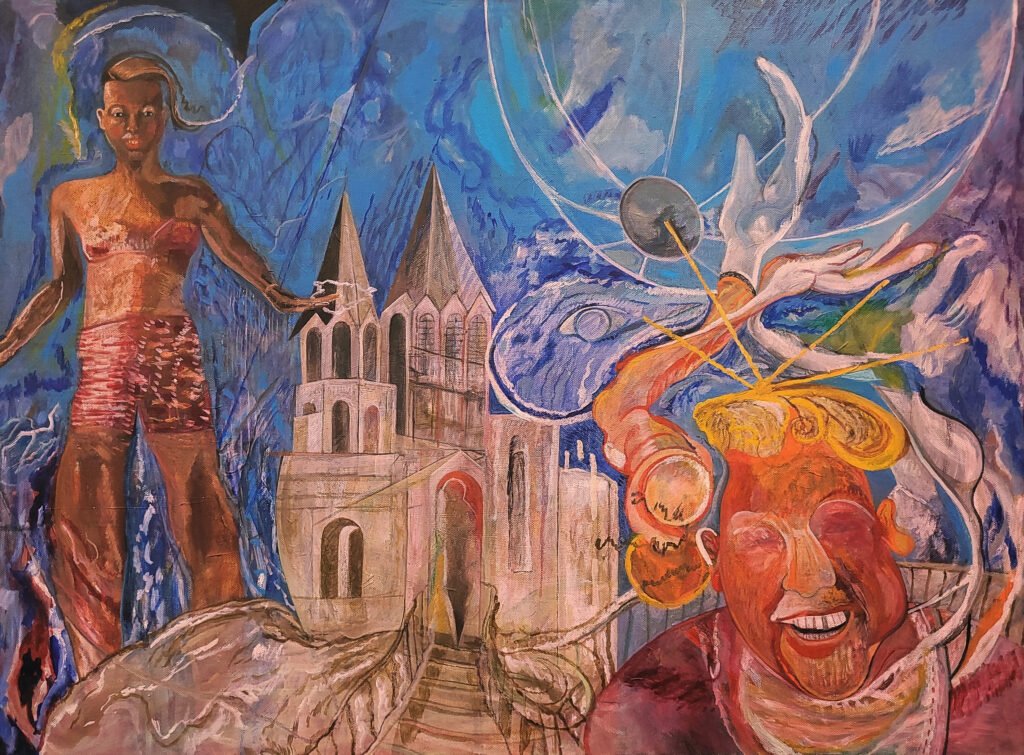
Among the works representing this continuing development is The Seer, created in 2026 in oil on linen and measuring 60 × 80 cm. The painting reflects an artist who remains actively engaged with his practice and continues to develop his visual language many decades after first writing in his diary that he wanted to become a painter.
De Groot is also scheduled to participate in the group exhibition Punto Zero, Il Segno che genera il Mondo, organized by the Italian curatorial group OASI at Palazzo Bellini in Florence from November 27 to December 6, 2026.
Looking Toward a Long-Awaited Debut
De Groot remains conscious of the complicated relationship between artistic recognition and the systems through which artists gain visibility. Some of the recent opportunities surrounding his work involve paid forms of promotion and publication, a reality he openly acknowledges. At the same time, he regards the fact that organizations approached him directly as a meaningful recognition of his work.
For an artist who once felt as though he had been performing to an empty hall, these new opportunities carry particular significance. They do not erase the disappointments of the past, but they provide another possibility: that viewers may finally have the opportunity to encounter his work and consider the ideas behind it.
His deepest wish is now to see his oeuvre presented in its full breadth in a debut exhibition, particularly in connection with his Diamond Jubilee. Such an exhibition would bring together decades of painting, drawing, restoration, experimentation, and persistence.
Wim de Groot’s story is therefore not simply one of an artist seeking recognition. It is the story of a conviction formed at fifteen and carried throughout an entire lifetime. From the Amsterdam museums and galleries of his youth to the Rijksakademie, from restoration studios to his own workspace, his path has repeatedly involved searching, questioning, learning, and continuing.
His career demonstrates how an artistic life can develop outside a straightforward trajectory. Formal education did not provide the answer he expected. Restoration became an unexpected teacher. Recognition remained elusive for much of his career. Yet through all these turns, painting and drawing remained constant.
Now, as his work reaches new publications, exhibitions, and audiences, the statement he wrote in his diary more than six decades ago takes on renewed meaning: his future life really was being determined there.